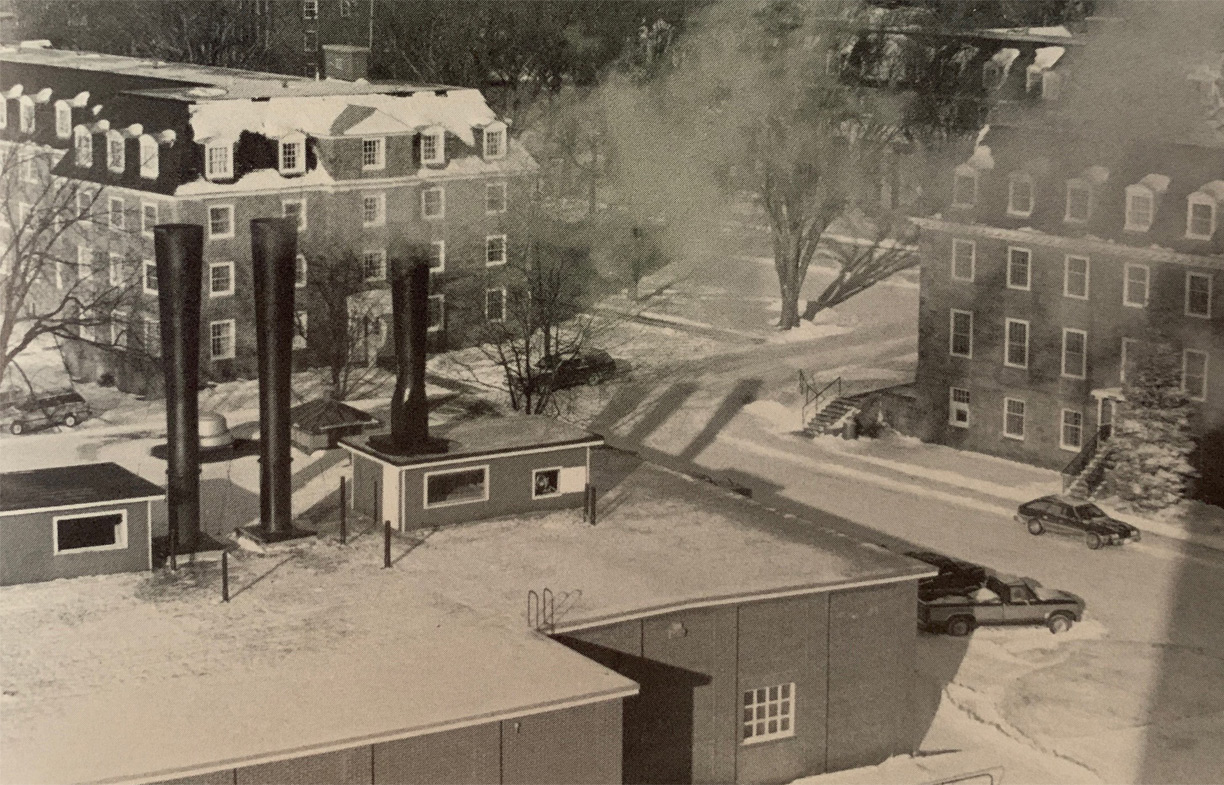
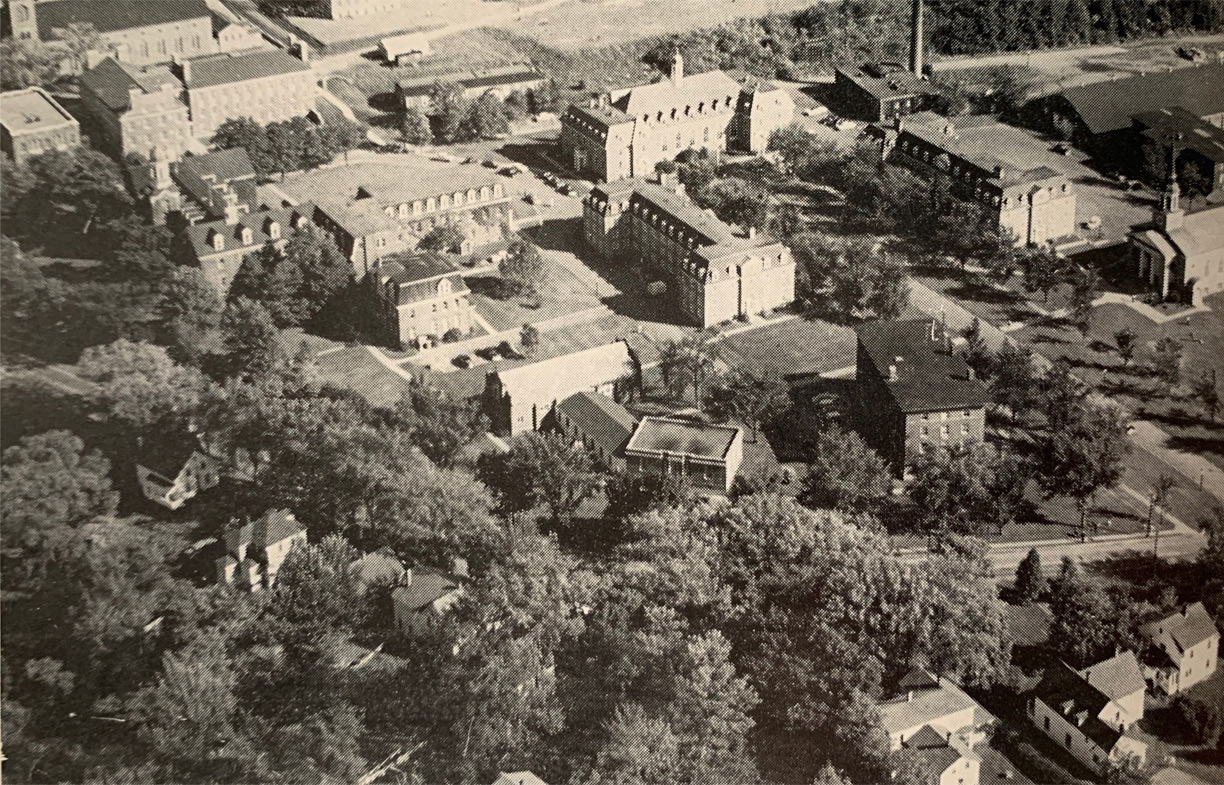
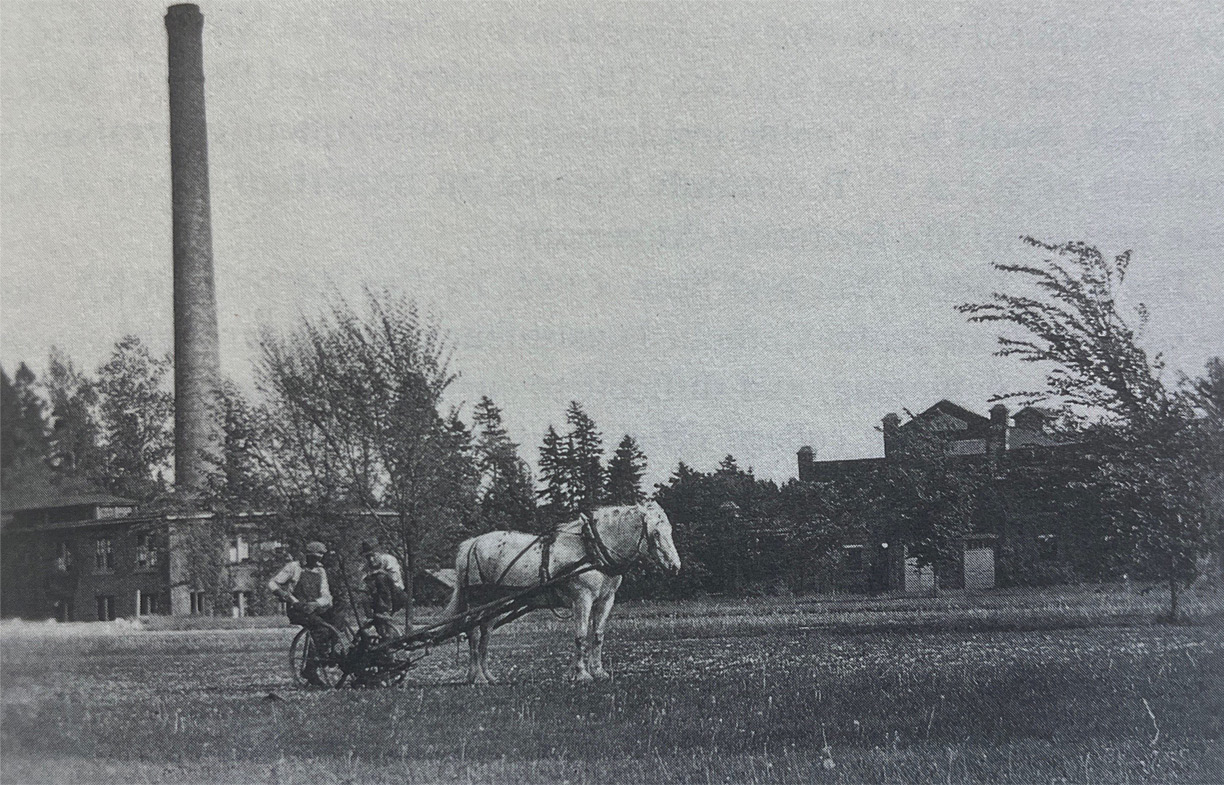




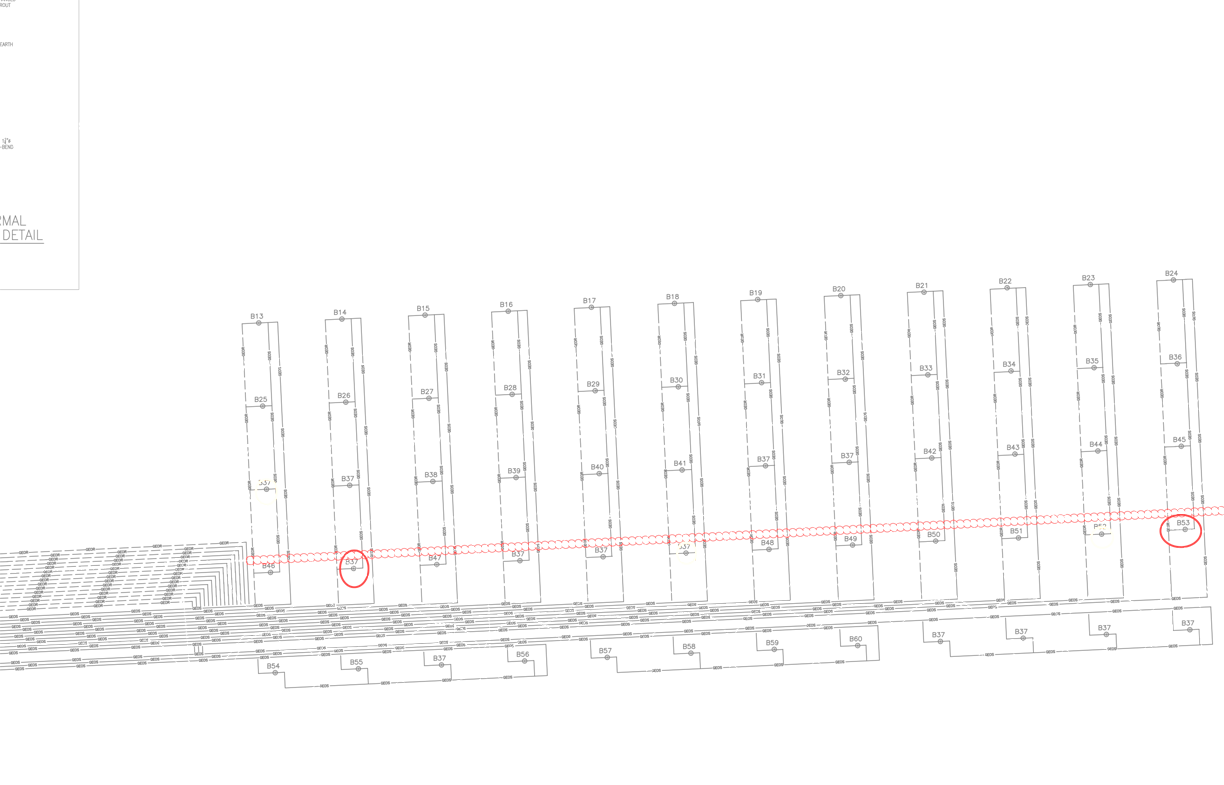






The Central Heating Plant
is a top priority for Mr. Latimer, who spends his days collecting and analyzing mountains of data.
The new Bachelor of Arts and Science degree in Climate and Environment furnishes students with a broad-based education in the ways in which science, politics, and society intermingle to both create and solve climate crises.>Ethan Copp ’24, a second-generation Xaverian from Palmer, Alaska, is a student in the program. He notes that although he was familiar with many of the scientific causes of climate change, he found his sociology courses to be especially beneficial: “they opened me up to seeing how important community is in solving the climate crisis.”
That’s why Copp’s joined forces with his fellow students to create ALPACA, the Antigonish League of People Acting for Climate Action. His friend, Biology student and Antigonish native Angus Kennedy, started the organization after spending a summer working in Dr. Dave Risk’s FluxLab; he studied the province’s landfills one summer, researching their compost emissions and analyzing methane production levels. ” was listening to the latest IPCC (Intergovernmental Panel on Climate Change) report,” he says, “and got so stressed out about climate change. I thought, there has to be something that I can do. The science has been telling the same story for the longest time and it’s getting more and more precise. But science doesn’t seem to be working very well as a mechanism to create change.”
Kennedy ’24 argues that there needs to be a social movement to create that change; hence, ALPACA was born. The group’s goal is to “lessen our impact on the environment, particularly in the communities in which we live. We are trying to promote a greater connection with the natural world, to foster more care for it.” In addition to climate protests, meetings with university administrators and local politicians, ALPACA organizes nature walks and guided foraging trips, operating under the assumption that if people spend more time in nature, they’ll care more about its future.

"I think climate anxiety is a symp-tom that is perfectly reasonable for the situation that we're in. We're facing an existential threat. And to worry about that is how you should respond. We shouldn't just be like, Oh, that's okey.' You should use that as fuel."

"But you've got to mindfully use it. If you are just debilitatingly anxious about the climate crisis, then it's so easy to just say, 'This is out of my hands. I'm just going to stop think-ing about it altogether, so that I'm not worrying about it all the time. And then I think people just give up."

"I think climate anxiety is a symp-tom that is perfectly reasonable for the situation that we're in. We're facing an existential threat. And to worry about that is how you should respond. We shouldn't just be like, Oh, that's okey.' You should use that as fuel."

"In high school, my friends and thought: 'what can we do?' So we got together our own little Climate Action Group. When I think about the future, about sea level rising, I think about our family cottage on the ocean - it would just be devas-tating to me to have to not have that anymore. And when it's some-thing personal like that, you realize that on a larger scale, in this moment, there are people who have to leave their homes due to climate events all the time. So there's good reason to be upset. But it's sort of sad, that we don't really care about something until we're able to relate to it. It's hard to care about every single human rights issue. But it's a lot easier to care about a human rights issue that affects you personally."

"Yeah, and it's he people who havecontributed the least to causing this problem who are suffering the worst consequences. Climate change will affect every single person on this plant."