Feature 1: Residence

A Place to Call Home

It’s 1945.
The Second World War has ended. You’ve come home from overseas and are taking advantage of the Veterans’ Rehabilitation training scheme.

The federal government will pay for your education, so you enroll at StFX. You look forward to the pastoral setting, only to quickly realize that there are many, many people who’ve ad the same idea. The university doesn’t have enough dormitory space to house you, or faculty members to teach you. Rooms that were meant for two have another bed squeezed in, and the basement of the university’s only dormitory – Mockler Hall – is converted into living quarters. A temporary military building is brought to campus; married students live there.
At StFX, this is a story with echoes of the past. In 1900, 100 students attended StFX. They lived and studied in Xavier Hall, alongside the faculty. By 1914, there were 218 students – and Xavier Hall could no longer house them all. Mockler Hall was built in 1915, to “provide clean, bright and airy rooms for the majority of the University students and professors.” The studentssuites were well-appointed, and included brick fireplaces – but the building’s main attraction was indoor plumbing.

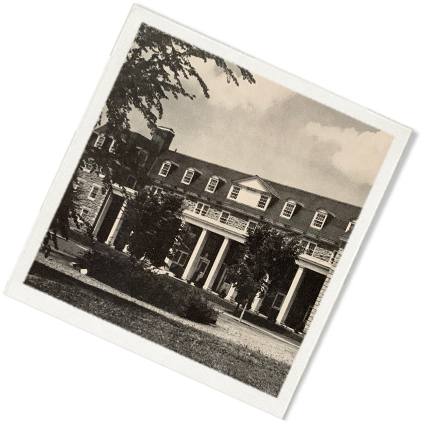
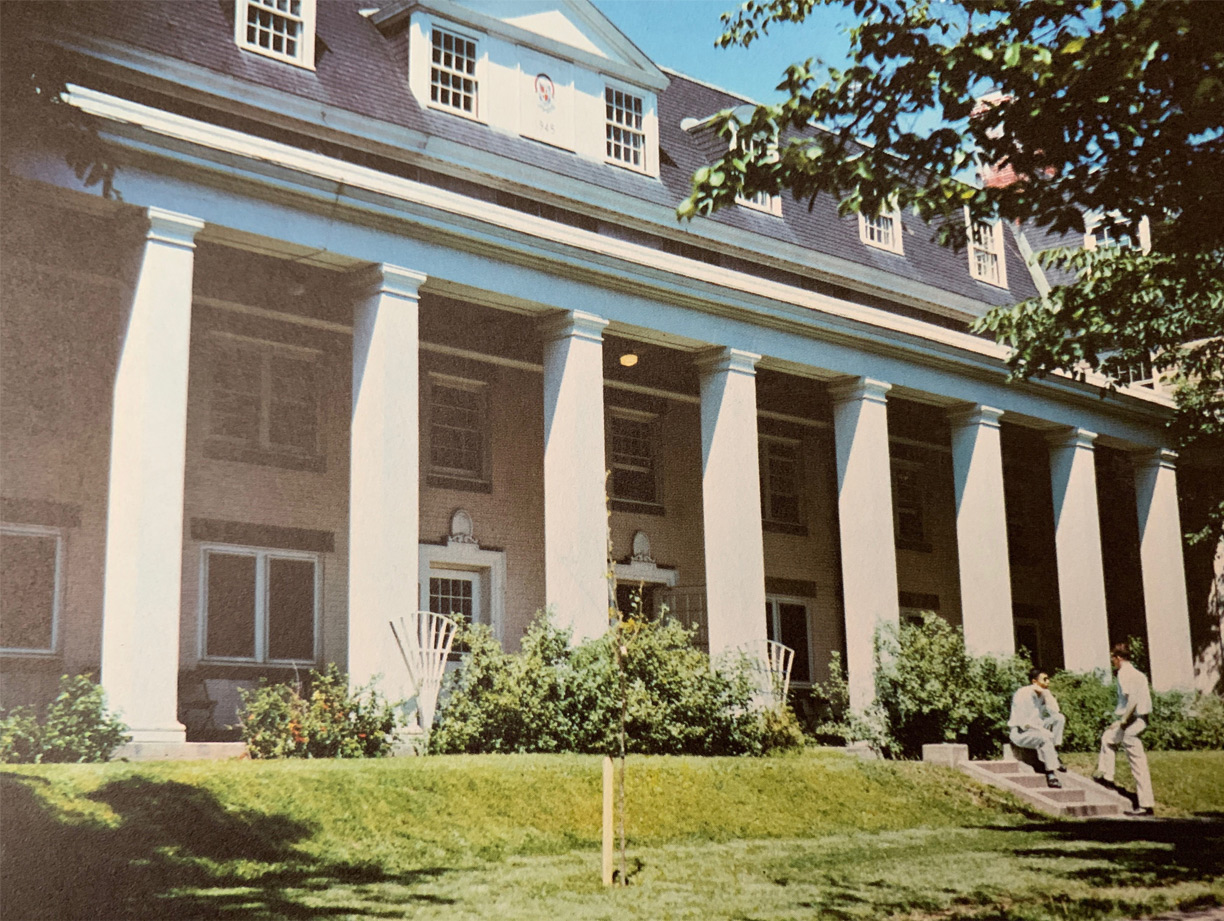
By 1945, with the addition of the veterans, more than 500 students were clamoring for space in residence. StFX brought in New England architect Jens Larson, who’d also designed Morrison Hall, to create a 200-person residence out of local sandstone, in the Georgian Colonial style – Cameron Hall.

Cameron Hall
It was divided into four houses: Tompkins, Thompson, MacDonald, and MacPherson, named for leaders of the university in the first decades of the twentieth century.
Together, they ushered StFX into the modern era and set the stage for future success as a national university of great renown.
Cameron Hall
It was divided into four houses: Tompkins, Thompson, MacDonald, and MacPherson, named for leaders of the university in the first decades of the twentieth century.
Together, they ushered StFX into the modern era and set the stage for future success as a national university of great renown.

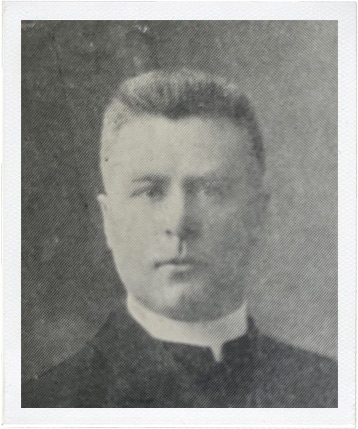
Father John Hugh MacDonald was the Vice-President and Prefect of Discipline (akin to a Dean of Students) during Father Tompkins’ time as an administrator of StFX. For its first fifty years, StFX had been a small college devoted to the “religious, social, and educational improvement of the Catholics of colonial eastern Nova Scotia,”argely concerned with the training of priests. In the first decade of the twentieth century, though, the Tompkins-MacDonald team began to re-imagine StFX as an institution of higher education that would rank among the best in Canada.

Father Jimmy Tompkins, Vice-President between 1908 and 1923, was determined to raise StFX from the local to the national: he improved academic standards by hiring first-rate professors; raised enormous sums of money to fund endowed chairs for academic departments; and cultivated relationships with significant donors who constructed five new academic buildings in the 1910s. He also, with his cousin, the Rev. Dr. Moses Coady, created the Extension Department and spawned the Antigonish Movement, one of the most important social development enterprises in the twentieth century.

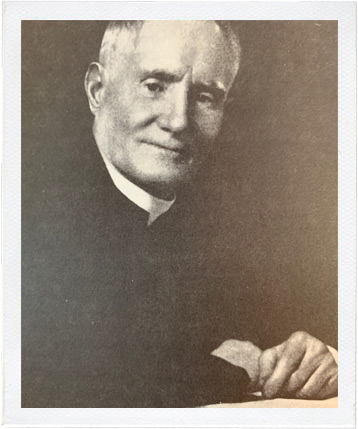
He was succeeded by the Reverend Doctor Hugh P. MacPherson, whom everyone called “the Old Rector.” He served in that capacity from 1906 to 1936 – the longest tenure of any StFX leader to date. MacPherson was himself a graduate of StFX and a “character,” who played the fiddle to the delight of students and faculty. He was an outstanding scholar, but it was his peculiar habits and absent-mindedness that made him a beloved figure on campus.

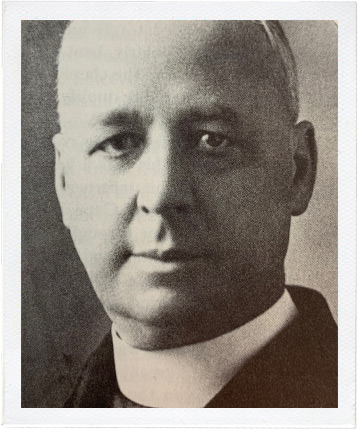
The Reverend Doctor Alexander Thompson was Rector of StFX from 1898 to 1906; previously, he’d been a member of the faculty and then the Vice-Rector. As StFX entered the twentieth century, Rev. Dr. Thompson ruffled feathers by introducing significant curricular reform, transitioning from a classical education to one more focused on professional and commercial programs. Thompson shepherded the university away from the instruction of Latin and Greek and towards preparing its students to become lawyers, doctors, engineers, and teachers.

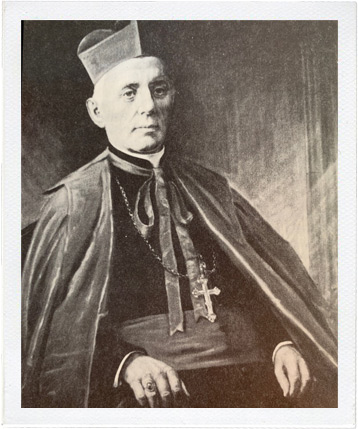
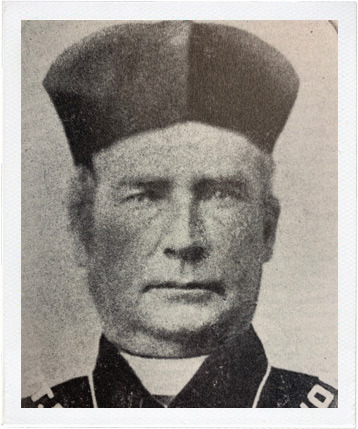
Bishop John Cameron helped establish StFX, right from the earliest days in Arichat. He was the college’s first permanent Rector and “guided its destinies” as both Bishop of Antigonish and Chancellor of StFX between 1877 and his death in 1910. He oversaw the construction of Xavier Hall on what would become StFX’s permanent campus, and believed fervently in the education of women. He brought the Congregation of Notre Dame to Antigonish in 1883 to establish a convent school (later, it became Mount Saint Bernard College. The Mount became affiliated with StFX in 1894, and in 1897, StFX became the first Catholic university in North America to grant degrees to women. (Look for a statue of Bishop Cameron outside of Xavier Hall, facing West Street.)

MacKinnon Hall
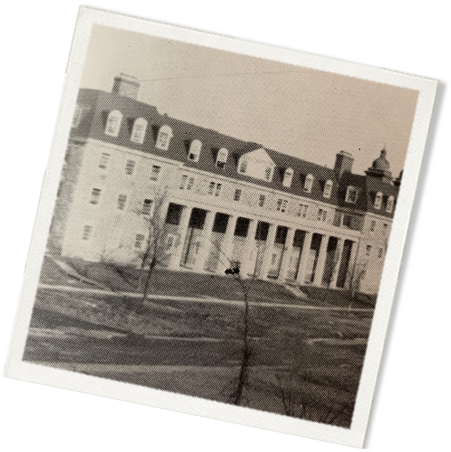
The university’s 500 students in 1945 rose to more than 900 in 1949, necessitating the construction of MacKinnon Hall, built across the street from Cameron Hall and its architectural twin. Instead of the four houses comprising Cameron Hall, though, MacKinnon had three (Chisholm, Gillis, and MacNeil), leaving the wing facing east for administrative offices.
MacKinnon Hall cost about $350,000 to build; in comparison, tuition at that time was $620. While Cameron Hall paid homage to administrators who’d pushed StFX into the twentieth century, the men for whom MacKinnon Hall’s houses were named represent StFX’s earlier history.
MacKinnon Hall
The university’s 500 students in 1945 rose to more than 900 in 1949, necessitating the construction of MacKinnon Hall, built across the street from Cameron Hall and its architectural twin. Instead of the four houses comprising Cameron Hall, though, MacKinnon had three (Chisholm, Gillis, and MacNeil), leaving the wing facing east for administrative offices.
MacKinnon Hall cost about $350,000 to build; in comparison, tuition at that time was $620. While Cameron Hall paid homage to administrators who’d pushed StFX into the twentieth century, the men for whom MacKinnon Hall’s houses were named represent StFX’s earlier history.

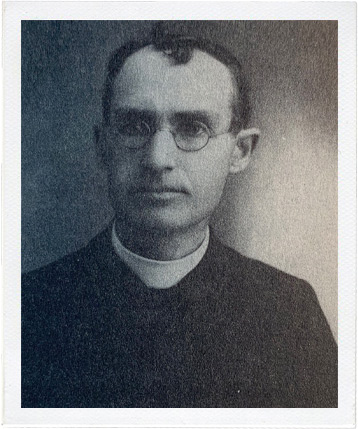
Following MacNeil’s unceremonious departure, Bishop Cameron installed a young priest, Father Daniel Chisholm, as Rector of the college. Chisholm, a professor of logic, Latin, and Greek, was known to be physically delicate – but also a tireless advocate for StFX. Known affectionately as “Dr. Dan,”Chisholm was a stickler for decorum: in order to graduate from StFX, students had to produce a certificate of good moral character. Students had all reading material approved by the vice-rector; their personal letters were subject to inspection by Dr. Dan; and visits to town were restricted to Thursdays, when the students could go in pairs, with permission. Like Neil MacNeil, Dr. Dan believed in the faculty’s right to political freedom, which clashed with the Bishop’s viewpoint; after a vacation to Florida in 1898 to mend his delicate health, Dr. Dan came home to find he’d been replaced as Rector.

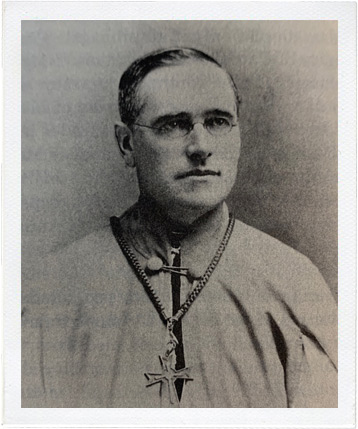
The founding member of the Board of Governors, Archbishop Neil MacNeil, took over from the Rev. Dr. Gillis as Rector in 1884. He convinced the people of Antigonish to give money and haul stone from a local quarry to campus to construct a new wing of Xavier Hall in the late 1880s, and his strong reputation in the community propelled him to become the editor of the local newspaper, the Casket, in 1890. He believed that that the newspaper should be apolitical, which unfortunately conflicted with the Bishop’s convictions. MacNeil was summarily removed to West Arichat in August of 1891, and although he tried to repair relations with the Bishop, his career in Antigonish was over (though he later became the Archbishop of Toronto).

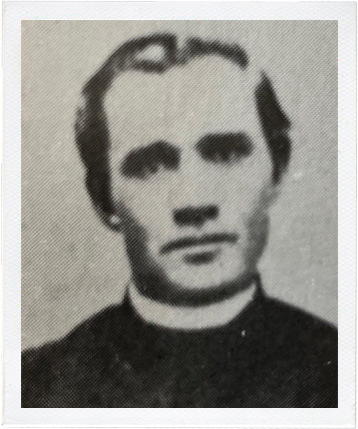
The Reverend Doctor Hugh Gillis was one of the first graduates of our college in Arichat. Known to be zealous and hardworking, Gillis had helped the ailing Bishop MacKinnon through the 1870s, especially around the management of StFX and the construction of the cathedral. His more than twenty-year career at StFX spanned a time of tumult: through the growth of the college in the 1860s, through the financial strain and diminished enrolment of the 1870s, and then the resurgence of the college in the 1880s.

Bishop Colin F. MacKinnon became the leader of the diocese of Arichat (which included Antigonish) in late 1851. Lamenting the lack of homegrown priests, he established a seminary at Arichat in 1853, but soon moved the fledgling college to Antigonish. He raised funds, hired faculty, and recruited students – all while overseeing the construction of St. Ninian’s Cathedral.

Under his guidance, StFX enjoyed a period of incredible growth; Bishop MacKinnon helped lift the Highland Catholics out of despair. What had once been a group “subjugated by religious intolerance, racial bigotry, and economic oppression now had their own college/seminary, a promising means to advance their religious, social, and economic interests in a new, freer, and more hospitable land.”
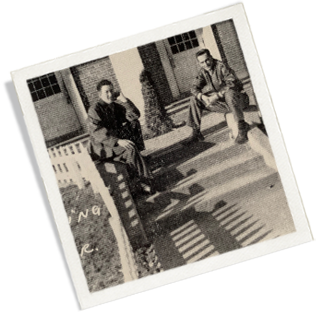
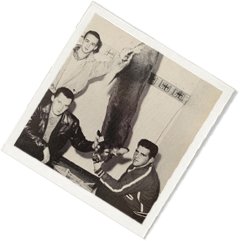
Each successive generation of StFX students believes they invented residence shenanigans-that their house was the most fun and the most close-knit. Archived material tells a very different story …
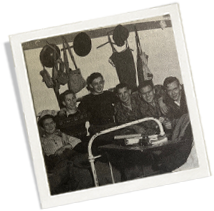
Thompson was known for “its share of bull sessions, water battles, and pillow fights,” all while maintaining a “favourable standing with the girls of MSB” in the 1960s. “Temperaments” in Thompson varied “from witty comedians to diligent scholars.”
Students in Tompkins had an ability to contrive “ingenious electrical hook-ups,”presumably to cook late-night snacks. The offices of the Xaverian Weekly were located for many years in the basement of Tompkins, and the clicking of typewriters was the soundtrack to the students’ lives. In later years, Tompkins and Thompson merged to form TNT, a women’s residence proudly represented by a stuffed Tiger named Tom and fiercely engaged in a rivalry with the women of Chillis (which formed from the merger of Chisholm and Gillis Houses and also became women-only).

"On my first day in TNT, we were visited by a large group of women who'd walked across the street from the Chapel, where they were attending the wedding of a classmate. They'd all lived in TNT during their StFX years, and spent half an hour teaching us cheers and chatting about the old days. It was a pretty great introduction to TNT."
Maddy Horne '19

In the 1950s, residents of MacPherson were known for cribbage tournaments and candle-light snacks, and noted “for their easy-going dispositions and their social activites.” MacDonald House was called the “fortress of Celtic lore,” complete with ghost stories and a resident bagpiper. The Camera Club darkroom and RCAF headquarters were in its basement

The 1965 yearbook notes that the men of Chisholm House had “the most offbeat hobbies:” they were apparently avid readers of the James Bond novels and kept a South American plant they named Harold. Meanwhile, the men of neighbouring Gillis were “so fond of academic endeavor that they always manage[d] to save some for tomorrow.” Before MacNeil earned a different reputation, its proximity to the Chapel made the boys’ five daily prayer visits quite convenient. 

In the modern age, residences at StFX are largely detached from most other facets of campus life. Elizabeth Yeo, Vice President of Students, is helping to change that. Cameron and MacKinnon Halls are now nearly 80 years old, and in dire need of modernization.

As we gear up for a major renovation of Cameron and MacKinnon Halls, Yeo has struck a committee that is contemplating how StFX can lead the nation in smart design for residence living. “Going forward,” she says, “We’ll build spaces that foster a culture of innovation. This could include social innovation, or tech, or the arts – Living Learning Communities give students the chance to collaborate, deeply, and to create.”
Living Learning Communities allow students with common interests to share living quarters, so that collaboration can happen organically. Yeo is determined, too, to “support residence communities that are diverse and inclusive and that reflect the multicultural and intersectional backgrounds of our students. We are creating spaces in which students can be their true selves and really flourish in this community.”
The vision combines the best elements from the past century of residence life at StFX: fun, camaraderie, and extracurriculars – just like the old days, when the newspaper offices or the campus dark room were encompassed within Cameron and MacKinnon.”Residences,” claims Yeo, “should be the first places in which students can find career and experiential learning programs, as well as mentors – both peer and staff.”
Yeo notes that StFX has a tremendous opportunity to build programming into residences in ways that many other universities just don’t have. And that’s really exciting.” Our relatively small size, coupled with the fact that the majority of first-year students live on campus, allows us to reimagine the type of residence experience we want for StFX students.

"Creating a sense of belonging is key. Before the students can settle into their studies and flourish, they really do need to feel like they belong here."