









Feature 2: StFX & Climate Action
“One of the most important things we can do to address the climate change crisis is talk about it.”

Science & Heart: The Most Perfect Union

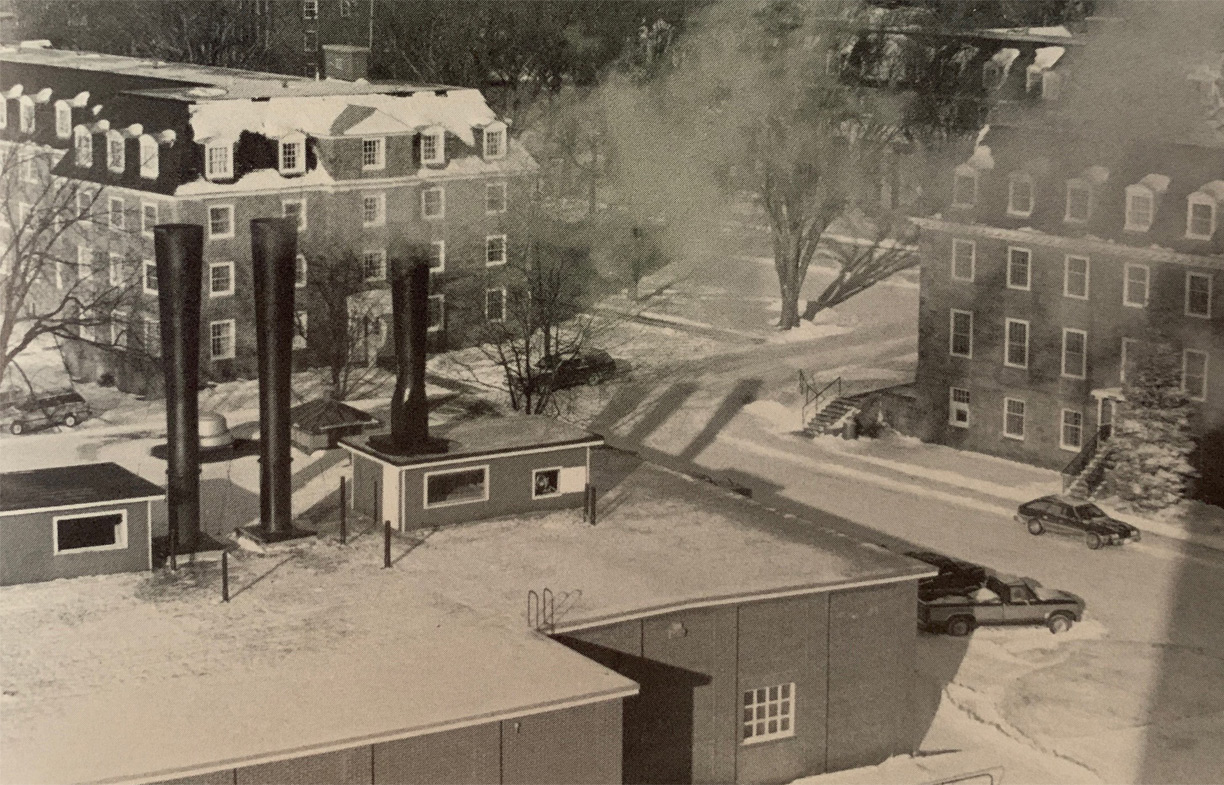
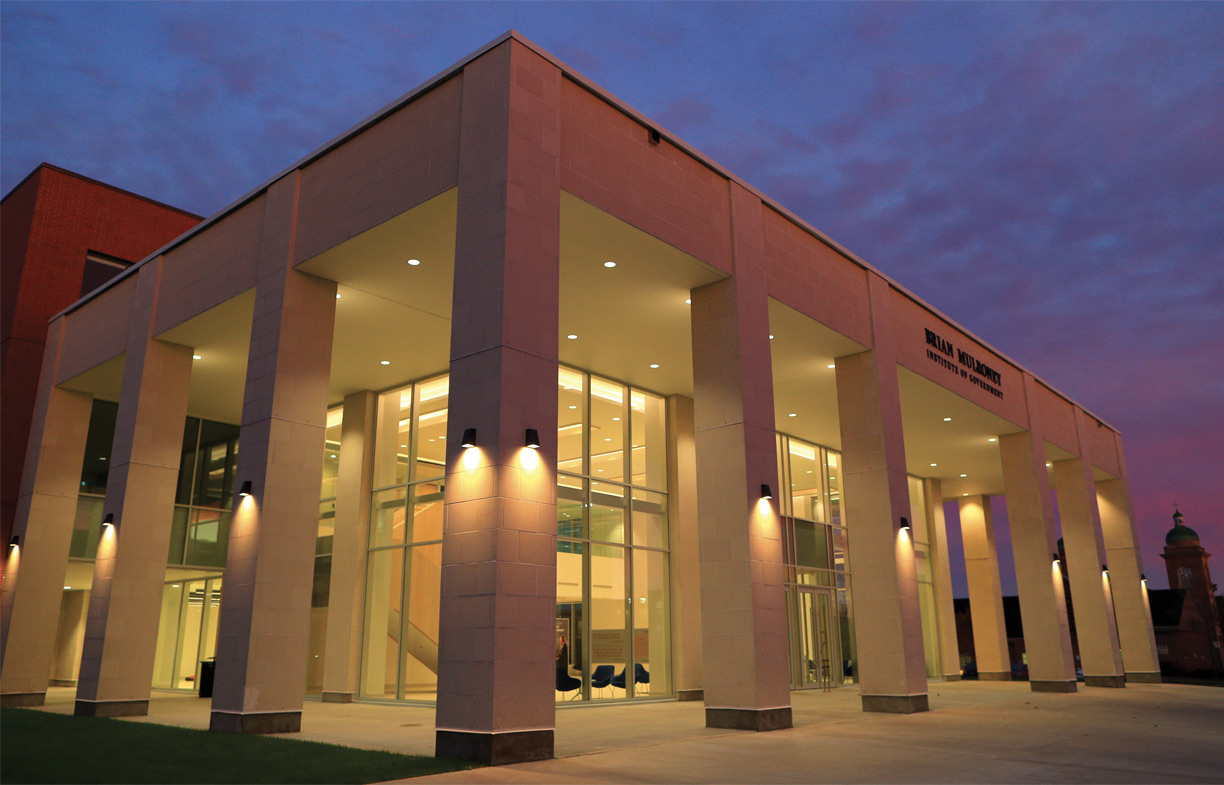
On a gorgeous autumn day, students loll on the low walls in front of the recently-built Mulroney Hall. Their conversation is briefly interrupted by the roar of a truck approaching on Martha Drive, delivering another load of furnace oil to the Central Heating Plant.
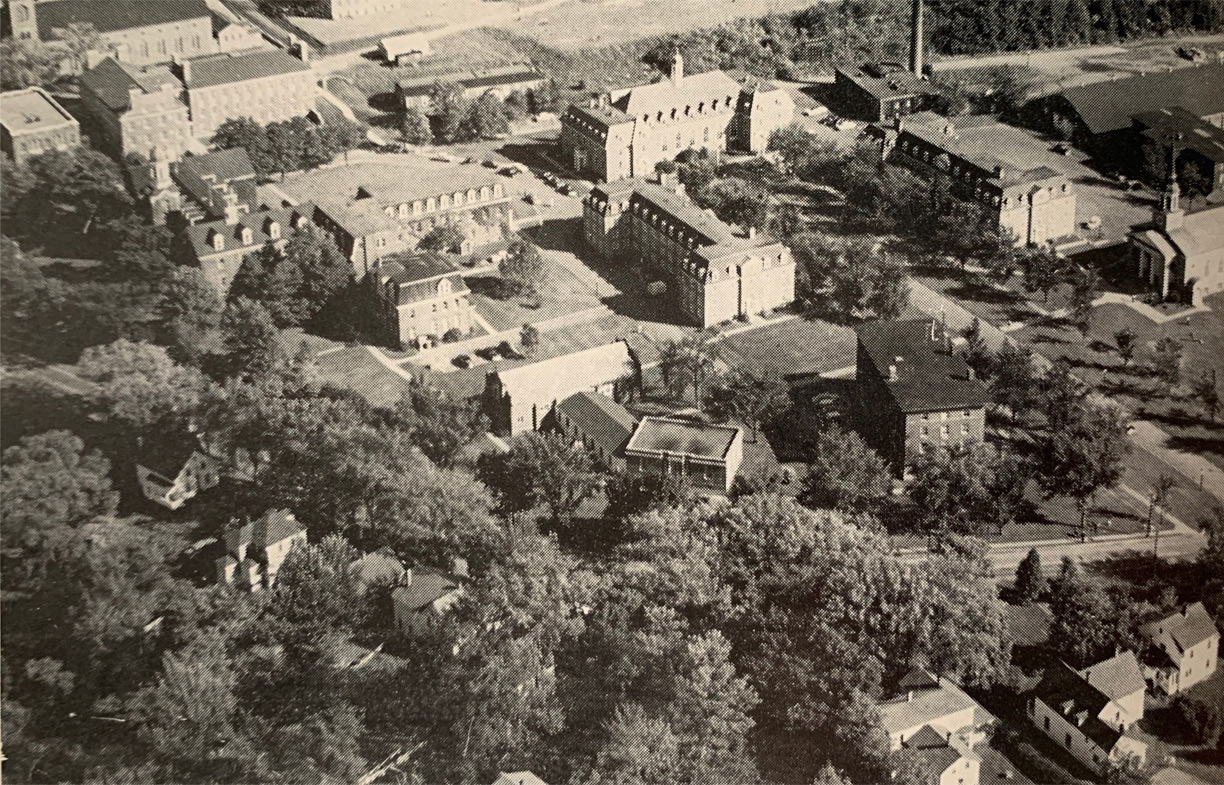
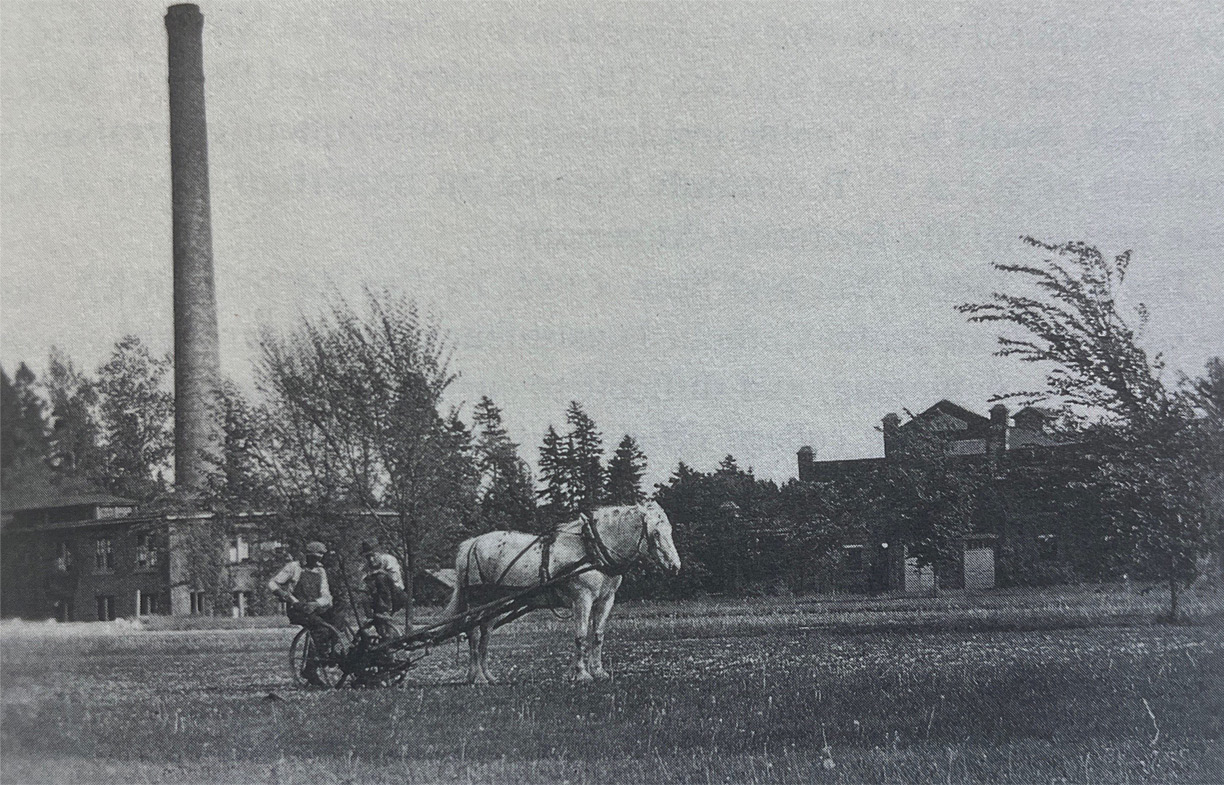
Amidst the bucolic idyll, the CHP is a relic from days gone by, when it was built on what was then the outskirts of campus. Now, it’s tucked snugly amidst Morrison, MacKinnon, and Mulroney Halls, and directly abutted by the Nasso Family Science Centre. From the CHP, fuel is converted into steam, which travels underground through a series of underground tunnels to deliver heat to campus buildings.
“The thing is,” notes Kevin Latimer, the university’s Energy Manager, ” is that by the time it gets to the Mount or Xavier Hall, we’ve already lost 31% of the fuel’s potential usefulness.” Dated boilers currently operate at only 85% efficiency, and scavenger loads – energy consumed in heating the plant’s oil tanks – combine with aging steam pipes to diffuse the fuel’s potential, before heat even arrives at its destination.

The Central Heating Plant
is a top priority for Mr. Latimer, who spends his days collecting and analyzing mountains of data.

PART 1

Latimer has been the driving force behind 15 years of improved energy efficiency on campus, collaborating with universities and colleges in the region on projects and best practices, and working with industry partners such as Siemens and Schneider to install an incredibly detailed metering system that constantly tracks the energy consumption of the campus.
“We’ve picked virtually all of the low-hanging fruit that we can,
he says, pointing to the extensive work that’s been accomplished since 2008, when we began tracking emissions output and energy use.
There are solar panels on the roofs of several buildings. We’ve installed energy-efficient windows in Morrison Hall that use ceramic frits to deflect solar glare and help maintain optimal temperatures in the building.
The lights in the main gym have been converted twice in the past ten years, from High Intensity Discharge (HID) to fluorescent and now, to LED – reducing their required energy from 25kw to 12kw to 6kw while providing higher lighting levels on the court.
Latimer notes that the university’s even replaced the old Zamboni machine with a new, Italian-made, electric ice machine. Its annual operating cost is 89% less than the previous propane-burning model – and when we install solar panels on the roof of the Charles V. Keating Millenium Centre, we’ll be the only university in Canada to have completely “green” ice making capabilities.
The “low-hanging fruit,”when amassed into a collective, has resulted in a stunning 42.5% reduction in greenhouse gas emissions since 2008. We are producing 45% less carbon dioxide per square metre of built campus, despite constructing three large new buildings in that period (Mulroney, Riley, and O’ Regan Halls). We’ve drastically reduced our consumption of electricity, furnace oil, and water, and increased our use of propane, which is a cleaner fuel source.
The current boiler efficiency project is slated to cut emissions by a further 2%, and possible next phase of the Emissions Reduction Action Plan (ERAP) involves replacing the fuel in the CHP with propane, netting another 4% reduction in GHG emissions.
But – and it’s a large but – our reliance on external, non-renewable sources of energy is both expensive and harmful to the environment. The current tax structure presents an enormous cost to the university, and the Russian invasion of the Ukraine has astronomically increased the price of furnace oil. And, the use of nonrewable energy sources is increasingly at odds with StFX’s commitment to being a positive contributor to the local and global community.
When Mulroney Hall was being built in 2018/2019, observers might have noticed the drilling of geothermal wells-enormous, vertical pipes that descend 600 feet into the earth.
This geothermal field is an addition to three others that already existed on campus and contributed to Mulroney Hall earning a gold LEED (Leadership in Energy and Environmental Design) certification for sustainable construction. Mulroney Hall has generated a net gain in energy production for the campus, putting energy into the grid rather than draining from it.
Latimer is confident that geothermal is the future – but transitioning away from fossil fuels, deconstructing the Central Heating Plant, digging new geothermal fields, and installing thousands of feet of new pipe underground will take time, money, and cooperation among the university, the federal and provincial governments, and industry partners.
It is not enough to understand the perils of climate change; we must care enough to act.

It is not enough to understand the perils of climate change; we must care enough to act.

PART 2

Latimer has been the driving force behind 15 years of improved energy efficiency on campus, collaborating with universities and colleges in the region on projects and best practices, and working with industry partners such as Siemens and Schneider to install an incredibly detailed metering system that constantly tracks the energy consumption of the campus.
In last year’s Donor Impact Report, we featured Preet Banga, a student in the Forensic Psychology program who held an Irving Summer Research Award in 2022. Her work centered on the ways in which human anxiety is heightened during significant climate events.
A year ago, Banga’s work seemed distant from Nova Scotia and Nova Scotians. After a year in which our province experienced a hurricane, forest fires, and a major flood, Banga’s work seems more prescient than ever before.
Now, Nova Scotians-like so many around the world who’ve also been impacted by climate change-keenly understand the psychological impacts of climate catastro-phes. Problems that happened to other people are unfortunately now our own.
This past summer, Banga was a Climate Change Intern with the Coady Institute; she conducted ethnographic research to gauge attitudes towards climate change. She started by asking about participants’ his past summer, Banga was a Climate Change Intern with the Coady Institute; she conducted ethnographic research to gauge attitudes towards climate change. She started by asking about participants
Banga emphasizes the importance of emotional connection in empowering people to mitigate against climate change, and power of a collective to effect action. “Students,” she argues, ” can create spaces for them to talk about climate action. After all, climate education is the way to answer these problems, include climate anxiety – which is inevitable.”

"One of the most important things we can do to address the climate change crisis is talk about it."

PART 3

“…they opened me up to seeing
how important community is in solving the climate crisis.”
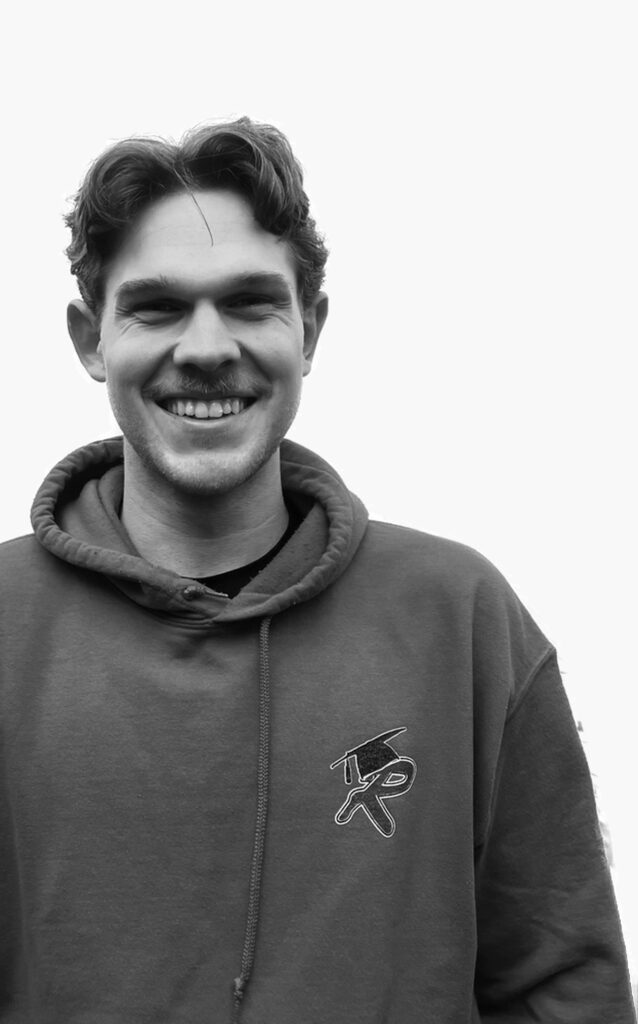
Ethan Copp ’24, Second-generation Xaverian Palmer, Alaska

The new Bachelor of Arts and Science degree in Climate and Environment furnishes students with a broad-based education in the ways in which science, politics, and society intermingle to both create and solve climate crises.>Ethan Copp ’24, a second-generation Xaverian from Palmer, Alaska, is a student in the program. He notes that although he was familiar with many of the scientific causes of climate change, he found his sociology courses to be especially beneficial: “they opened me up to seeing how important community is in solving the climate crisis.”

That’s why Copp’s joined forces with his fellow students to create ALPACA, the Antigonish League of People Acting for Climate Action. His friend, Biology student and Antigonish native Angus Kennedy, started the organization after spending a summer working in Dr. Dave Risk’s FluxLab; he studied the province’s landfills one summer, researching their compost emissions and analyzing methane production levels. ” was listening to the latest IPCC (Intergovernmental Panel on Climate Change) report,” he says, “and got so stressed out about climate change. I thought, there has to be something that I can do. The science has been telling the same story for the longest time and it’s getting more and more precise. But science doesn’t seem to be working very well as a mechanism to create change.”

Kennedy ’24 argues that there needs to be a social movement to create that change; hence, ALPACA was born. The group’s goal is to “lessen our impact on the environment, particularly in the communities in which we live. We are trying to promote a greater connection with the natural world, to foster more care for it.” In addition to climate protests, meetings with university administrators and local politicians, ALPACA organizes nature walks and guided foraging trips, operating under the assumption that if people spend more time in nature, they’ll care more about its future.

“…and got so stressed out about climate change. I thought,there has to be something that I can do.”
Ethan Copp ’24, Second-generation Xaverian Palmer, Alaska
“In high school,my friends and I thought: ‘what can we do?”
Franny MacGregor ’25,

"I think climate anxiety is a symp-tom that is perfectly reasonable for the situation that we're in. We're facing an existential threat. And to worry about that is how you should respond. We shouldn't just be like, Oh, that's okey.' You should use that as fuel."

"But you've got to mindfully use it. If you are just debilitatingly anxious about the climate crisis, then it's so easy to just say, 'This is out of my hands. I'm just going to stop think-ing about it altogether, so that I'm not worrying about it all the time. And then I think people just give up."

"I think climate anxiety is a symp-tom that is perfectly reasonable for the situation that we're in. We're facing an existential threat. And to worry about that is how you should respond. We shouldn't just be like, Oh, that's okey.' You should use that as fuel."

"In high school, my friends and thought: 'what can we do?' So we got together our own little Climate Action Group. When I think about the future, about sea level rising, I think about our family cottage on the ocean - it would just be devas-tating to me to have to not have that anymore. And when it's some-thing personal like that, you realize that on a larger scale, in this moment, there are people who have to leave their homes due to climate events all the time. So there's good reason to be upset. But it's sort of sad, that we don't really care about something until we're able to relate to it. It's hard to care about every single human rights issue. But it's a lot easier to care about a human rights issue that affects you personally."

"Yeah, and it's he people who havecontributed the least to causing this problem who are suffering the worst consequences. Climate change will affect every single person on this plant."