

Feature 3: The Ecosystem of Social Entrepreneurship at StFX

Wicked Problems

And the Students Who Solve Them
Those who make their living on the ocean sometimes die there, too, their bodies lost forever. Ben wondered if he could make something that would help keep fishers safe-and bring them home.

Ben Collings-MacKay spent the summer after his first year at StFX on the wharves of eastern Prince Edward Island, diving underneath the hulls of lobster boats and cutting tangled ropes free from the propellers.

It’s one in a long line of jobs he’s had that other young people seem reluctant to do, but he liked the wharfside chats – and the cash. He noticed, though, that very few of the fishers wore lifejackets. Men (and some women) who are third- and fourth-generation fishers, he notes, “didn’t grow up wearing them,” despite being all too aware of the myriad dangers of a life on the sea. There’s tigma around wearing lifejackets, and in an ancient trade known for its superstitions, wearing a lifejacket can often be seen as inviting bad luck – as though you’re expecting something bad to happen.
What if, Ben thought, he could design a lifejacket that could be encompassed within the fishers existing oil gear, so integrated that it’d be almost undetectable? And what if he could include a GPS locator beacon within the device?

PART 1

In an Entrepreneurship class taught by Louise Brennan last year, Ben’s second at StFX, he began to develop his idea. She mentored him as he applied-and received-a grant through DiscoverBox, which is part of the Nova Scotia Sandbox program for budding entrepreneurs and administered through the Coady Institute at StFX.
Ben then took his concept through several pitch competitions, including the prestigious national competition, March Madness.
There, students present their business ideas as succinctly and attractively as possible; Ben made it to the Round of 16, narrowly losing to the eventual overall winner.
The experience, he says,
“taught me a lot about how to make a pitch-how to cut out all the fluff and make a tight presentation.”
This past summer, Ben became a Wallace Intern, a program funded by former StFX Board Chair Mark Wallace and his family. The Wallace interns (four individuals or teams) receive mentorship and training for 12 weeks each summer, including from Mr. Wallace himself, on how to make their ideas a reality. Now back at StFX for his third year, Ben is hoping to find external funding to pay for the services of an engineering firm to help design his prototype, and for a seamstress in Eastern PEI to mock up that prototype.
From idea to reality, Ben’s project shows that StFX’s ecosystem of entrepreneurship-including faculty mentorship, alumni support, external grants, pitch competitions, and peer support-is functioning well.

“Everyone in my community knows a family who’s lost someone” at sea, Ben says, “and if my product can help with that, I’m happy.”
PART 2

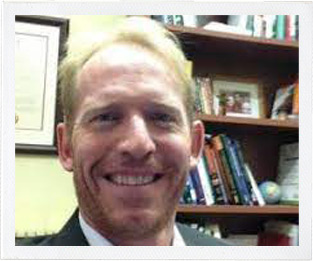
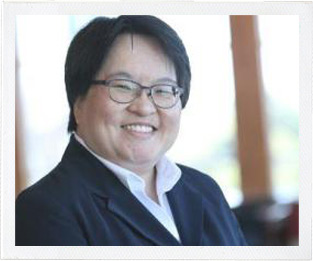
Drs. Neil Maltby and Opal Leung, of the Department of Management at the Gerald Schwartz School of Business, can easily rhyme off a dozen students like Ben, young people who capitalize on the opportunities both within and beyond the classroom to build their ideas into fruition. Maltby notes that StFX students are increasingly determined to marry business with “addressing bigger societal issues,” or what he calls “wicked problems.” Such problems “have deeply entrenched social or economic or political issues. They’re not easy to solve.”And yet – our students, year after year, turn their talents and their energies towards solving such problems.
Dr. Neil Maltby
Department of Management,
Gerald Schwartz School of Business
Dr. Opal Leung
Department of Management,
Gerald Schwartz School of Business
Schwartz students often couple their personal lives with their professional aspirations and undertake projects that are close to their hearts.
Maltby is quick to assert that today’s students are continuing the work of the Antigonish Movement, and later, the Coady Institute and the Extension Department. The progenitors of that social enterprise venture – people like the Rev. Dr. Moses Coady, his cousin, Father Jimmy Tompkins, and Sister Marie Michael MacKinnon – felt strongly that St. Francis Xavier University must expand its educational efforts beyond the boundaries of campus. They became entrenched in the communities of northeastern Nova Scotia, building study clubs and literacy and numeracy – and empowering citizens to become masters of their own destiny.
Indeed, the Schwartz School of Business maintains strong partnerships with various aspects of the Coady Institute. The DiscoverBox program is administered through Coady, as are the Xaverian Innovation and Entrepreneurs Micro-Grants.

PART 3

Entrepreneurship at StFX is not limited to the Schwartz School. There are many examples of faculty members merging their research interests with industry.
Like Dr. Gerry Marangoni, whose work in gold nanotechnology led to the development of an early rapid test for COVID-19.
Or Dr. Dave Risk, whose FluxLab conducts gas emissions testing across Canada and in Alaska and Norway. The FluxLab, nestled within StFX’s Earth Sciences Department, is itself a significant employer in Antigonish – but Dr. Risk has also started two further successful companies, Eosense and Arolytics.
In StFX’s Faculty of Education, Dr. Greg Hadley holds the recently-established Chair in Entrepreneurship Education. His work focuses on equipping current Bachelor of Education students with the tools they’ll need to mentor budding entrepreneurs, after they become teachers themselves. “At StFX,” Dr. Hadley notes, “our students study the theory behind entrepreneurship but more importantly, apply this theory in classroom settings through innovative and creative pedagogy.
“The impact, we hope, will be scores of entrepreneurial young people leaving high school ready to conquer the economic and social challenges of the future.”

PART 4

It is this ecosystem of entrepreneurship that galvanized Alex Dorward ‘ 11 to establish a new pot of funding for StFX students, the Social Entrepreneurship Fund. Dorward, himself an established entrepreneur with several successful businesses to his name, credits StFX with giving him a strong sense of community among his fellow students, the faculty, and later, with fellow alumni.
“People invest in people,” he notes, and he’s keen to support current and future students as they take their ideas from concept to reality, through the often-underfunded nuts-and-bolts phase of development. With other StFX alumni, Dorward fundraised an initial $25,000 for the Fund, which he hopes will grow quickly with added support from alumni and friends of StFX. In addition to the $5,000 currently available in annual funding, students from any faculty or discipline who are recipients of Dorward’s Social Entrepreneurship Fund will also benefit from his mentorship; he’s committed to meeting with students virtually as they work through the development of their business.
“I want to give StFX students opportunities that students at other, larger universities don’t get.”
“For a small school,” he says, “StFX really packs a punch-and for smaller schools to attract and retain top students, they need to have a niche. Ours is social impact.” There’s a misconception, Dorward argues, that social entrepreneurship is not profitable. In fact, incorporating social justice elements into one’s business plan is not only the right thing to do – it also gives businesses a competitive edge in tight markets in which everyone is fighting for consumers.
Dorward envisages two ideal outcomes of the Fund: one, that someone can scale their idea widely, and have it positively impact many people on a broad scale; or two, that the business stays local and has a profound impact on a community. So, either breadth or depth – and he’d be happy with either.

Any student at StFX who has an idea has increasingly plentiful resources to explore that idea-and a multitude of faculty members and alumni who are behind them every step of the way.

Dr. Maltby looks forward to his students annual submissions of new venture ideas: “It’s my favourite day of the year. I read these ideas and marvel. In so many cases, I’ve never even thought about that possibility. They have such creativity, such interesting perspectives.”

Alex Dorward agrees-and invites other alumni and friends of StFX to get involved, by supporting an existing fund, creating a new one, or lending their time and energies to students in search of mentorship.
If you’re keen to contribute, please contact Alexis MacDonald at apmacdon@stfx.ca.